
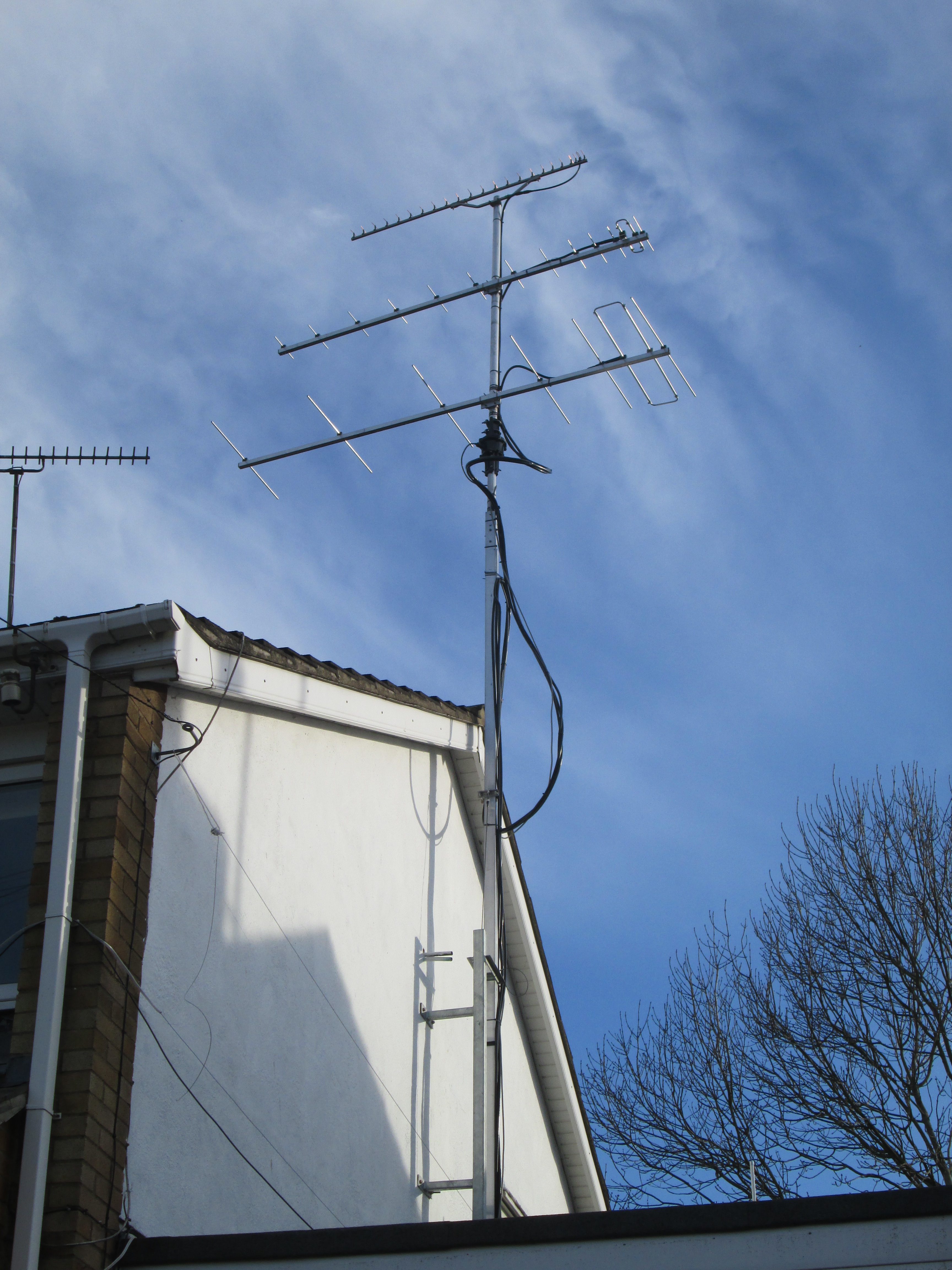
I have tried hard to get interest in VHF working through my talks at local radio clubs but without much success. Here is a little information for a wider audience.
Tropospheric propagation is a key mode of signal transmission in the VHF (Very High Frequency) and UHF (Ultra High Frequency) bands, particularly between 70 MHz (4-meter band) and 1296 MHz (1.2 GHz, or 23 cm band). Here’s a detailed overview tailored to these frequencies:
Tropospheric Propagation Basics
Tropospheric propagation refers to the bending (refraction), reflection, or ducting of radio waves in the lowest layer of Earth’s atmosphere — the troposphere (up to ~10-15 km altitude). Variations in temperature, pressure, and humidity create refractive index gradients that affect radio signals.
1. Tropospheric Refraction
- Always present, but often weak.
- Causes signals to bend slightly, extending line-of-sight range (~15–30% more).
- Most noticeable in the lower VHF (e.g., 70 MHz) and UHF bands.
2. Tropospheric Ducting
- Occurs under temperature inversions where warm air overlays cooler air.
- Creates a “duct” that traps radio waves, enabling them to travel hundreds to over 1000 km.
- Most common during high-pressure systems, especially over water or flat terrain.
- Strongest on UHF bands (432 MHz and above), but noticeable at 144 MHz as well.
- Can support 70 MHz contacts too, but less common due to the wavelength being more sensitive to terrain and atmospheric scattering.
3. Tropospheric Scattering
- Weak propagation mode allowing signals to travel 100–500 km.
- Caused by small-scale irregularities in the troposphere.
- Common across all these bands, but requires high power and gain (especially above 432 MHz).
- Used for beyond-line-of-sight links in commercial and military systems.
Frequency Dependence Overview
| Frequency Band | Troposcatter | Refraction Gain | Ducting Potential | Notes |
|---|---|---|---|---|
| 70 MHz | Moderate | Good | Rare/Weak | Similar to HF/VHF hybrid behaviour |
| 144 MHz | Good | Good | Occasional | Tropospheric openings can span hundreds of km |
| 432 MHz | Very Good | Moderate | Frequent | Strong ducting over oceans or flat land |
| 1.2 GHz | Excellent | Lower | Strong/Sharp | Sharp signal peaks, strong ducting but more line-of-sight dependence |
Practical Implications for Radio Amateurs
- DXing on 144 MHz and above often depends on tropospheric ducting — watch for high-pressure systems, especially over the sea.
- Beacons and APRS networks are useful to monitor tropo openings.
- Weather tools (like Hepburn maps or radiosonde data) can predict ducting potential.
- Higher frequencies (e.g., 1.2 GHz) may experience “knife-edge” sharpness in ducting — strong signals or none at all.
🛰️ Tools for Monitoring & Forecasting
- Hepburn Tropo Forecast: https://www.dxinfocentre.com/tropo_eur.html
- VOACAP & DX Maps: Used for real-time propagation and DX spotting.
- Radiosonde & Weather Data: For identifying inversions.
If you’re using modes like FT8, SSB, or CW, tropo can extend your range significantly. Narrowband digital modes are especially useful during marginal tropo conditions at 432 MHz and 1.2 GHz.
It is a common myth that VHF propagation is line of sight, but even under “flat” conditions this is simply not so. 400 km range is often possible given suitable power and antenna. Have a go if you haven’t, starting with 2 metres, SSB or CW!
 Amateur Radio News from Jon Stow, G4MCU